
Friday March 05, 12:30 – 13:30
Cost: From £55
Location: Online (Watch live or on catch up)
Course outline:
Identifying additional needs in EAL Learners: strategies for assessment and support
EAL (English as an Additional Language) students, just like English as a first language students, may also present with additional educational needs. However, identifying these needs can be more complex when students are still developing their English language proficiency.
This webinar explores how to effectively assess, monitor, and support EAL learners who may have underlying learning differences or language disorders. Participants will learn to distinguish between challenges related to language acquisition and those that may indicate broader SEND (Special Educational Needs and Disabilities) requirements.
Training Topics Include:
- Understanding the factors that influence learning progress in EAL students
- Benchmarking and tracking progress: using baseline data and ongoing assessments to inform support
- Collaborative working: effective strategies for liaising with SEND teams and specialists
- Identifying language disorders vs. language acquisition challenges
- Adapting support plans and interventions for EAL learners with additional needs.
Learning Outcomes:
By the end of the session, participants will:
- Understand the key factors that can affect learning progress in EAL learners
- Gain confidence in benchmarking student progress and using data to identify potential concerns
- Learn how to work effectively with SEND teams to ensure joined-up support for EAL students
- Be better equipped to distinguish between language learning and additional learning needs
- Apply strategies to ensure inclusive, responsive educational provision for all learners.
Speaker:
Ian Morris, Head of EAL, Moreton Hall
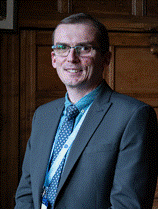
Ian has been involved in the field of English Language Teaching for over 17 years, working in South Korea, Spain, Romania, Poland and the UK. He is currently Head of EAL at Moreton Hall School in Shropshire where he is responsible for quality EAL teaching in the Prep, Senior School and Sixth Form as well as supporting departments on EAL academic matters. He has a BSc in Geography and holds the Cambridge CELTA and DELTA qualifications. His main interests lie in curriculum design, assessment, cultural integration and data analysis. When not teaching or training, he can be found roaming the Welsh hills on his mountain bike!

